
A summer in the Botanic Garden
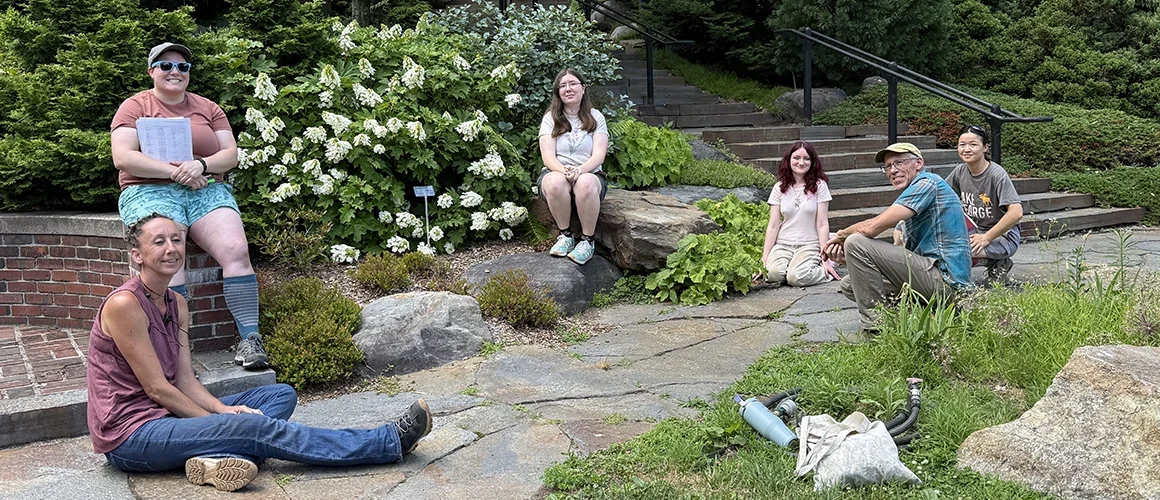
Mount Holyoke College student Barbara Wilkins ’28 discusses the excitement of working in the Botanic Garden.
The first time I visited the Mount Holyoke College Botanic Garden, I was 6 years old. My grandmother, Connie Harvey Wilkins ’65, lives near campus, and every spring, she and I explore the annual flower show in Talcott Greenhouse. I could never have imagined at age six that years later, I would not only be a Mount Holyoke student, but that I would spend my summer working among those very plants as the Botanic Garden’s curatorial intern.
At first glance, a botanic garden is a peculiar choice of job site. I am a history major and hope to work in museums or public history, and I have built experience through student jobs at both the Mount Holyoke College Art Museum and the College Archives & Special Collections. A summer spent on horticulture does not seem to make sense.
Botanic gardens, however, are a type of museum. They maintain living collections that require constant and diligent care, unlike inanimate objects, but are nevertheless curated and displayed. I worked temporarily for the MHC Botanic Garden in the spring of my first year, weeding and tending the outdoor gardens. I realized that I enjoy taking care of plants, but not as a career path, and while I was looking for more relevant opportunities, director Tom Clark told me about this curatorial internship.
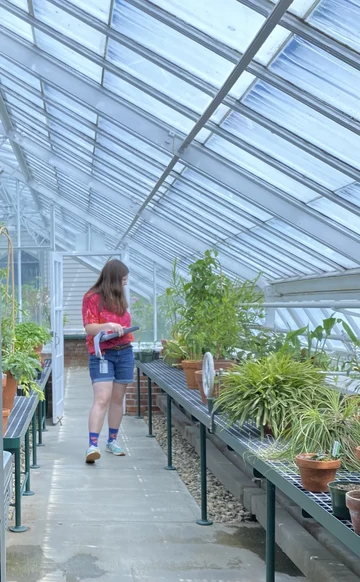
My primary responsibility during this internship was managing the collection. I added newly accessioned plants to our record-keeping database, BG-Base, and I used that database to begin an inventory of the 2,000 plants in the collection. For those plants that needed new labels, I learned to laser-cut metal labels in the Fimbel Maker & Innovation Lab.
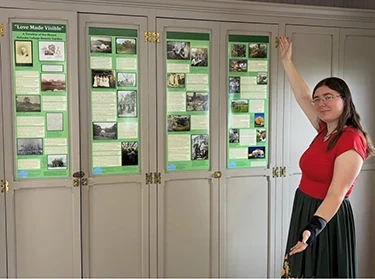
The task I enjoyed the most, however, was my independent project. I created and installed a series of posters telling the long history of the Botanic Garden, based on research I did in the college archives. Professor Lydia Shattuck, then head of the botany department, founded the institution in 1878, which means that the Botanic Garden’s 150th anniversary in 2028 is quickly approaching. The display, now in the central head house, is titled “Love Made Visible,” after a line from the dedication in the 1939 yearbook to botany professor Asa Kinney, who spent decades tending the gardens: “Work is love made visible.”
From this project, I gained invaluable experience in archival research, synthesizing a complete history from primary sources, and crafting an engaging, educational narrative for visitors. I had practiced archival research and historical synthesis with my job at the college archives, as well as an independent study researching the history of sport fencing at the college, but this was my first time creating a display.
I chose to highlight the Botanic Garden’s contribution to academic pursuits. It has served many purposes, from a source of cut flowers to a respite from cold New England winters, but through everything it has been a center of education and research. Professor Shattuck founded the Botanic Garden to serve as a resource for the botany department, and Talcott Greenhouse was built to allow botany classes to study plants from warmer climates. Though the botany department no longer exists—itself a tragic tale beyond the scope of this article—the Botanic Garden still supports biology classes and faculty research.
I am very proud of how the display turned out. The day I completed the posters and mounted them near the entrance, Russ Billings, who retired after working as greenhouse supervisor for decades and whom I mentioned multiple times in the display, came for a surprise visit. He read through the posters, including the parts that told years of history that he experienced himself, and he approved. It soothed the worries I had about misrepresenting the history or the institution I had come to admire so deeply.
I worked alongside three public horticulture interns, who learned about garden maintenance and helped tend the indoor and outdoor plants. As the only curatorial intern, I was somewhat isolated, but we helped each other with tasks and learned about each other’s jobs. I had a wonderful time working with them, as well as the three amazing full-time staff. The staff cares deeply about the gardens and greenhouses that they tend, and it was a privilege to work with and learn from them.
For many, the Mount Holyoke College Botanic Garden may only summon images of the flower show and its vibrant blooms. This internship taught me that it is so much more than that. From the iconic Talcott Greenhouse to its three acres of outdoor gardens between the Art Building and Reese, the Botanic Garden is the heart of campus. I spent my summer learning how to manage and curate this living, breathing collection, and I cannot wait to use the skills I developed as I go forward.