Storytelling through objects
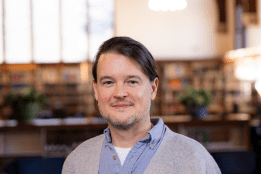
Xuân Pham uses art to explore identity, displacement, vulnerability and the hope of collective understanding.
Xuân Pham says academia found her through art. Pham grew up in an immigrant family with parents who had little exposure to higher education and grandmothers who could not read or write. After arriving in the United States from Vietnam as a child, Pham struggled with English and the experience of living between two worlds. She recalls that drawing became a language she understood.
She took refuge in art, which eventually led her to the University of Nebraska Omaha, where she studied drawing, painting and art history. In her first collegiate art history course, she learned that making art is part of a larger intellectual conversation.
“I didn’t know one could talk about art like this,” she recalls. “I just thought one produces art.”
Pham is now an assistant professor of art studio at Mount Holyoke College, and her installations explore the Vietnamese–American experience. Using materials rich with cultural and political histories, she considers displacement, migration, colonialism and the effect of war.
Pham describes her artmaking as a “constant thirst for self-discovery.” While her extended family came to the United States as refugees under circumstances that feel extraordinary to her, she also recognizes their story as part of a common history of displacement.
In a 2025 solo exhibition at Hampshire College, she invited audiences to physically participate in that history. For the installation, Pham cast over 1,000 plaster tiles; student workers helped her hand-paint them to create a floor resembling the patterned cement tiles of her childhood. Visitors walked the installation, cracking the tiles and carrying plaster dust through the gallery. “Every single person who enters into that space,” Pham explains, “has an impact on it.”
The installation also featured rubber plants and recordings of Pham’s father singing Vietnamese songs about war and hope. Other elements were crafted from edible rice paper, which cracked, curled and changed in the gallery’s atmosphere. Maintaining the installation required patching and mending, teaching Pham to think differently about healing and repair.
This connection between storytelling and object-making also guides Pham’s teaching. Influenced by bell hooks’ vision of education as the practice of freedom, Pham wants her students to examine competing perspectives, recognize bias and develop greater empathy. “I’m training storytellers,” she points out. “Their storytelling is through object-making.”
Pham first joined Mount Holyoke as a visiting faculty member after completing a postgraduate teaching fellowship at Northeastern University. She chose to stay in South Hadley because she found a community where both experimentation and failure could become part of learning. Her students gave her the freedom to try new approaches, offer feedback and take risks alongside them.
Outside the classroom, Pham loves cooking, an interest that is beginning to enter her artistic practice. She also enjoys reading, researching and visiting exhibitions while spending as much time as possible in the studio.